


























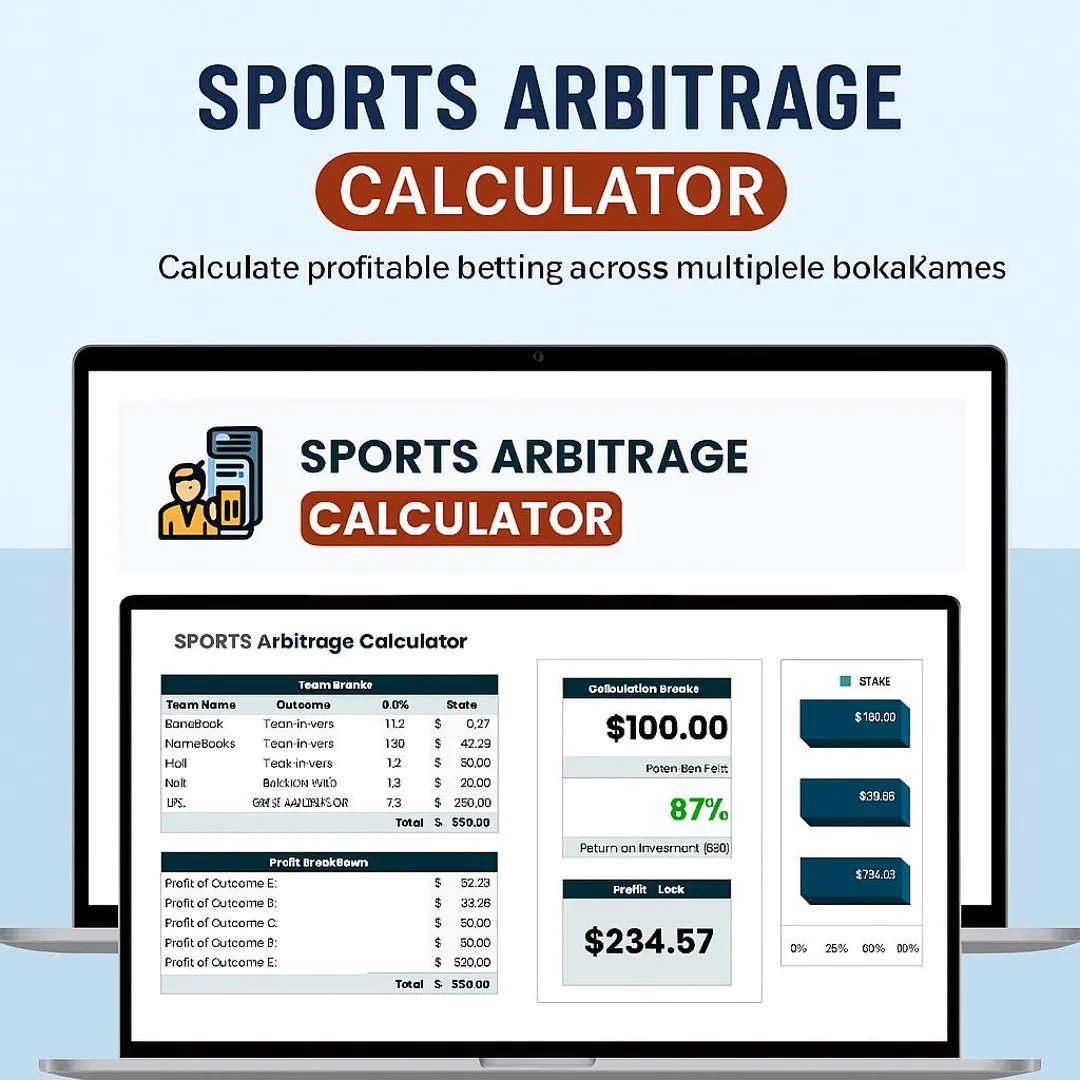
An arbitrage betting calculator turns scattered odds into a clear plan. It helps compare prices on every outcome of a market, estimate whether the combined odds leave room for a locked-in return, and divide your total stake across the bets. For a reader learning the mechanics, the useful part is not just the profit figure on the screen; it is understanding why 2-way, 3-way, and 4-way arbs behave differently and where the plan can break down.
What the Calculator Is Really Doing
At its heart, the tool converts decimal odds into implied probabilities. It adds those probabilities together. If the sum is below 100 percent, the market may offer an arbitrage opportunity because the prices across licensed operators imply a return without relying on one result. The calculator then works backward from your total investment, using each outcome's implied probability to suggest a stake. It also shows the expected payout, total profit, and return on investment so you can compare one opportunity with another. A lock-stake option is helpful when you know how much you want on one outcome and need the calculator to size the rest.
The Stake Formula in Plain English
The logic is straightforward even if the math looks formal. Each stake is proportional to that outcome's implied probability, scaled to your total outlay. In practice: divide your total stake by the combined implied probability, then multiply by the implied probability of the outcome. This is why the calculator can handle more than one outcome without changing its core approach. It keeps the payout as even as possible, so the winning bet covers the losing stakes and leaves a margin. If the odds move or the stakes are rounded too heavily, the margin can shrink, so check the final payout figures rather than trusting the first calculation.
Two-Way Arbs: Clean and Quick
Two-way markets are the simplest to calculate because only two results matter. You enter the best available odds for each side and a total stake, and the calculator returns the split. A common temptation is to favor the outcome with shorter odds, but the tool should decide the size based on implied probability, not gut feel. Two-way arbs are also easier to audit: one winning bet pays, one loses, and the numbers are easy to reconcile. The risk is not usually arithmetic; it is execution. Odds can disappear before both bets are accepted, and one operator may apply different settlement rules. A calculator gives you the blueprint, not a guarantee that both bets will be matched as planned.
Three-Way Arbs: More Moving Parts
Three-way markets appear in sports where a draw is possible, such as some match-result markets. The calculator must split the stake across all three outcomes, which makes accurate odds entry more important. If one price is stale or belongs to a market with a different settlement rule, the apparent edge can vanish. The profit margin is often thinner because more outcomes mean more chances for the combined implied probability to climb above the useful threshold. Good practice is to enter odds in the correct order, confirm that all outcomes are mutually exclusive, and check whether any bet can be voided under the operator's rules. The stake splits may look uneven, but that is normal: the calculator is balancing payouts, not treating every outcome equally.
Four-Way Arbs: Bigger Puzzles, Tighter Discipline
Four-way arbs raise the coordination challenge. With four possible outcomes, the calculator has more variables to balance, and the chance of one odds source changing or one bet being restricted increases. These opportunities can be useful in markets with several distinct results, but they reward careful setup. Make sure every outcome covers the market completely and that no missing result is possible. Check that the market is not affected by dead-heat rules or special settlement conditions. Enter each price exactly, use the total stake you can genuinely commit, and review the projected payout for every outcome before placing anything. If the final numbers do not show a clear buffer after rounding, the opportunity may be too fragile to pursue.
Practical Checks Before You Place the Bets
A calculator cannot see account limits, odds movement, operator rules, or payment processing times. Before acting, confirm that each licensed operator accepts the stake size, that the market rules match, and that you can complete all bets before prices change. Keep a record of the odds, stakes, and expected payouts. Treat the profit figure as a target that depends on clean execution. If a bet is voided, partially matched, or settled under a different rule, the balanced outcome may fail. Also remember that arbing can attract account restrictions, so consider whether the edge justifies the operational effort and friction.
A sports arbitrage calculator is a planning tool for splitting stakes across two, three, or four outcomes so that the payouts line up. It is most useful when you understand implied probability, check the final payout figures, and treat execution risk as part of the process. Use it to compare opportunities and size bets, not as a substitute for verifying odds, market rules, and operator conditions.
6 Comments